

Patients with chronic pain, arthritis, tendon injuries, neuropathy, or complex inflammatory conditions often hear the same message: manage the symptoms, slow the decline, or wait until the problem becomes severe enough for surgery. Sometimes that approach is necessary.
But often, patients ask a reasonable question: Is there another path?
That question is part of what has driven interest in regenerative therapy in Springfield, Missouri, and across the country. Patients want more than symptom control. They want to know whether the body’s repair systems can be supported, whether function can improve, and whether the course of illness can change.
That is where regenerative medicine can be helpful, but only when it is practiced with caution, evidence, and clinical judgment.
In my practice, regenerative therapy is not just an injection. It is a process. The body must be prepared, the correct biologic signal must be delivered, and the repair environment must be supported over time.
That framework is the foundation of the Sharlin Neuro Regenerative Protocol.
📋What You’ll Learn From This Article
By the end of this guide, you will understand:
- What regenerative therapy really means
- How PRP, bone marrow concentrate, and cell-based treatments differ
- Why “stem cell therapy” is often used too loosely
- What the evidence says about knee osteoarthritis, tendon pain, and joint injuries
- Why preparation matters before any regenerative injection
- How the Sharlin Neuro Regenerative Protocol works
- What questions to ask before choosing regenerative medicine treatment
What Regenerative Therapy Means
Regenerative medicine refers to treatments designed to support repair, restoration, or improved function in damaged tissues. In orthopedic and pain medicine settings, regenerative therapy may include platelet-rich plasma, also called PRP, bone marrow aspirate concentrate, adipose tissue procedures, or selected cell-based treatments. These options are not interchangeable.
| Treatment | Source | Common Use | Key Point |
| PRP | Patient’s own blood | Arthritis, tendon pain, ligament injury | Uses platelet signaling and growth factors |
| Bone marrow aspirate concentrate | Patient’s bone marrow | Joint degeneration, selected orthopedic concerns | A mixed biologic preparation, not purified stem cells |
| Adipose-based procedures | Patient’s fat tissue | Selected musculoskeletal uses | Processing method matters |
| Umbilical or amniotic products | Donor tissue | Often marketed heavily | Many orthopedic claims are not FDA-approved |
A serious regenerative medicine clinic should explain these differences clearly. A PRP injection is not the same as a stem cell procedure. Bone marrow concentrate is not the same as umbilical cord tissue. A tendon injection is not the same as an injection for knee arthritis.
The better question is not, “Can we inject something?”
The better question is, “What does this tissue need, and is the patient biologically ready to respond?”
The Biology: Repair Starts With Signaling
Regenerative therapy is largely about signaling.
The body already has healing systems. But in chronic illness or long-standing injury, those signals can become impaired. Inflammation may stay active too long. Mitochondria may underperform. Sleep, blood sugar, hormones, immune balance, and mechanical stress can all affect repair.
This is one reason regenerative treatments may fail. A biologic product placed into a poor healing environment may not create the expected response.
Mesenchymal stem cells, also called MSCs, are often described as if they directly rebuild tissue. The science is more nuanced. Their value appears to come largely from signaling, immune modulation, blood vessel support, and the release of factors that influence local repair cells.
What the Evidence Says About Regenerative Therapy
The evidence for regenerative medicine is not all the same. Some studies are promising. Some are mixed. Some are negative. A responsible approach has to hold those facts together.
PRP for Knee Osteoarthritis
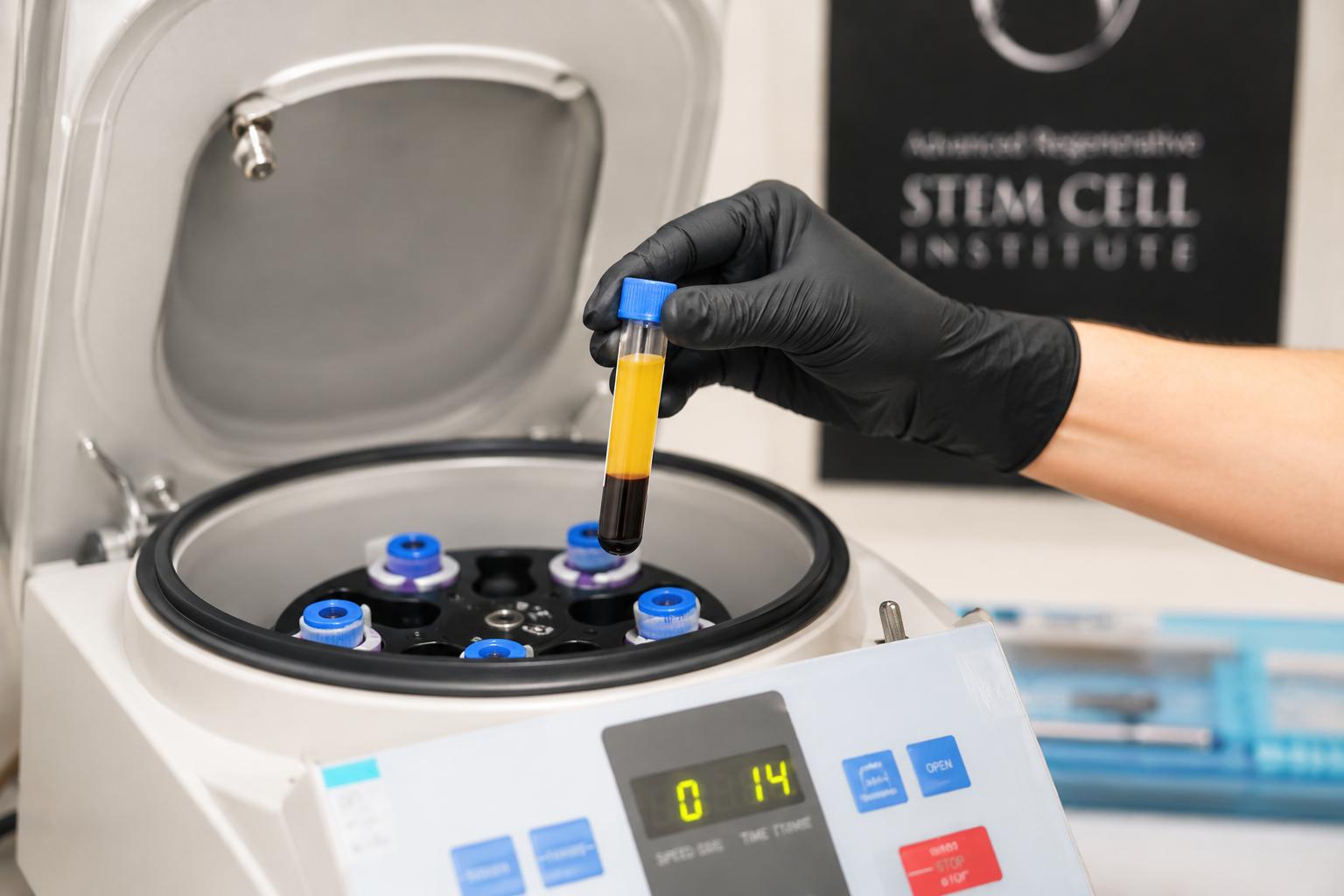
PRP is made from a patient’s own blood and processed to concentrate platelet components. These platelets contain growth factors and signaling molecules that may influence inflammation and tissue remodeling.
For knee osteoarthritis, research is mixed.
The RESTORE clinical trial, published in JAMA in 2021, found that PRP did not significantly improve pain or slow cartilage volume loss compared with saline placebo at 12 months. Other analyses have reported improvements in pain and function for some patients.
The American Academy of Orthopaedic Surgeons states that PRP may reduce pain and improve function in symptomatic knee osteoarthritis, but gives that recommendation limited strength because the evidence is inconsistent.
PRP may help selected patients, but it is not guaranteed to result in cartilage regrowth. It is not a replacement for strength work, movement correction, or a clear diagnosis.
Bone Marrow Aspirate Concentrate
Bone marrow aspirate concentrate, often called BMAC, is created by collecting bone marrow, usually from the pelvis, and processing it into a concentrated biologic preparation.
It contains platelets, cytokines, progenitor cells, stromal cells, and other signaling components. Calling it “stem cell therapy” can be misleading because it is not a purified stem cell product.
Studies comparing BMAC with placebo or PRP show potential, but they do not prove that BMAC is always superior. In one trial, both PRP and BMAC improved symptoms for knee osteoarthritis, but neither treatment clearly outperformed the other.
Tendons, Ligaments, and Rotator Cuff Pain
PRP is also used for tendon and ligament conditions, including rotator cuff tendinopathy. Some reviews suggest benefit for pain and function, especially over longer follow-up periods. Other studies show more modest results, particularly when compared with exercise therapy.
A regenerative injection may be one tool, but it should not be the entire plan.
Why Preparation Is Part of the Treatment
The Sharlin Neuro Regenerative Protocol begins before the injection.
When I evaluate a patient, I am not only looking at the diagnosis. I am looking at readiness.
That includes:
- Inflammatory burden
- Blood sugar control
- Mitochondrial function
- Nutrient status
- Sleep quality
- Hormonal balance
- Medication history
- Movement patterns
- Nervous system sensitivity
Before treating a joint-, tendon-, ligament-, or nerve-related pain pattern, we want to understand why the body has not repaired itself adequately on its own. Sometimes the problem is mechanical overload. Sometimes it is systemic inflammation.
The Sharlin Neuro Regenerative Protocol 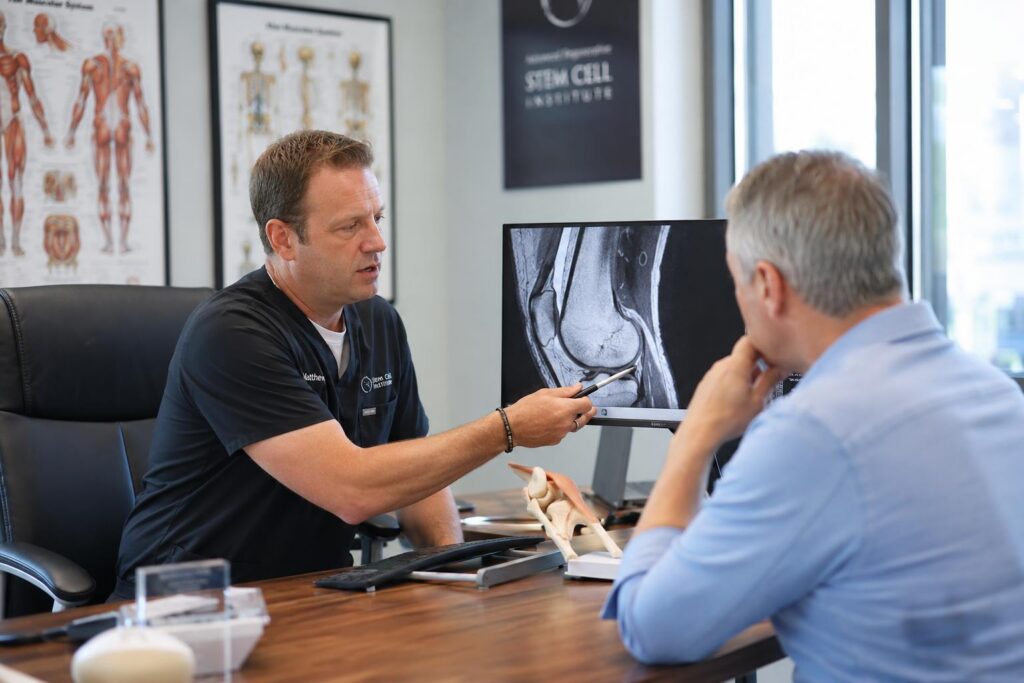
Stage One: Prepare the Biological Terrain
This stage includes a detailed history, physical exam, imaging review when needed, and laboratory assessment when appropriate.
The goal is to identify barriers to healing. These may include insulin resistance, inflammation, nutrient depletion, poor sleep, deconditioning, medication conflicts, or ongoing mechanical stress.
For patients with chronic pain, this stage also considers nervous system regulation. Pain sensitivity and tissue damage are related, but they are not always the same thing.
Stage Two: Deliver a Targeted Biologic Signal
The intervention depends on the condition.
A patient with early knee arthritis may need a different strategy than someone with severe bone-on-bone degeneration. A tendon problem may require a different approach than intra-articular inflammation.
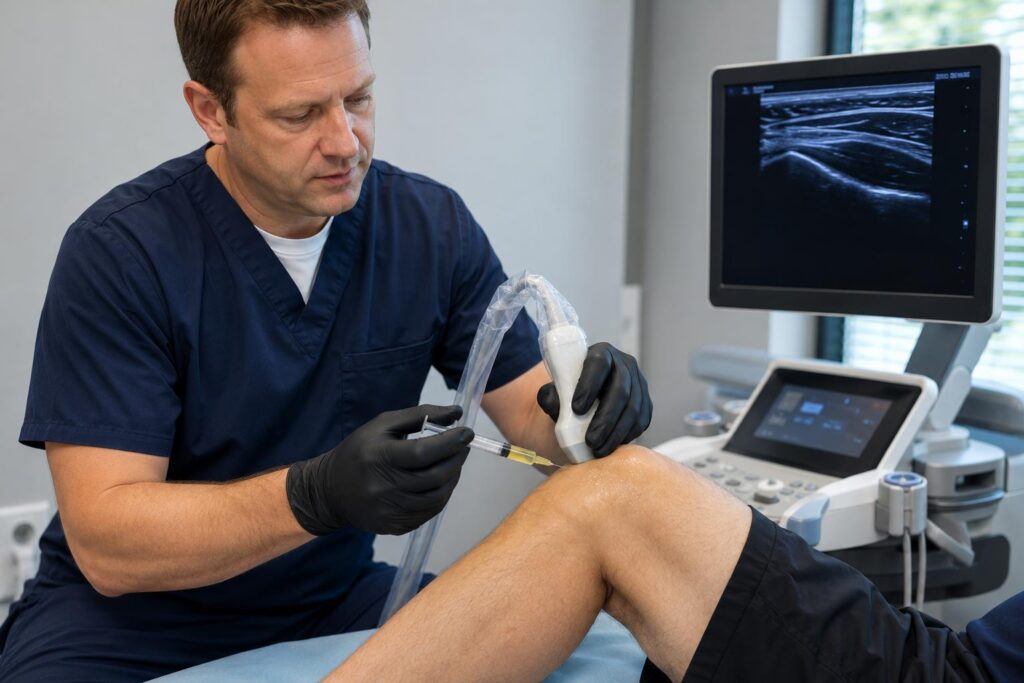
When an injection is used, precision matters. Image guidance, diagnosis, product preparation, sterile technique, and post-procedure instructions all affect the outcome.
The goal is not simply to inject cells to treat pain. The goal is to place the right signal in the right tissue at the right time.
Stage Three: Support the Repair Window
Regenerative therapy is not a one-visit event. Biology takes time.
Some patients need one procedure and focused rehabilitation. Others may need a series of treatments. Nearly everyone needs some combination of load management, movement work, sleep support, and metabolic care.
Without follow-through, even a well-selected treatment may underperform.
Who May Be a Better Candidate for Regenerative Therapy?

Regenerative therapy tends to make the most sense for patients with early to moderate disease, preserved function, and a willingness to participate in the full process.
Better candidates may include patients with:
- Early or moderate osteoarthritis
- Focal tendon or ligament injury
- Persistent pain after conservative care
- Overload-related musculoskeletal problems
- A clear diagnosis and realistic goals
Regenerative therapy may be less appropriate for patients with severe joint collapse, major instability, full-thickness tendon rupture, severe malalignment, or osteonecrosis of the femoral head. Sometimes surgery is the right answer. Sometimes regenerative medicine may help reduce pain, improve function, or delay a more invasive procedure. Sometimes it should not be offered.
A good consultation should answer four questions:
- What is the pain generator?
- What tissue are we targeting?
- What does the evidence say?
- What outcome is realistic?
Regenerative Therapy – Safety, FDA Status & Ethical Use
Patients should be cautious about broad claims involving stem cells, exosomes, umbilical cord products, or amniotic products.
The FDA states that regenerative medicine therapies have not been approved for orthopedic conditions such as osteoarthritis, tendonitis, disc disease, tennis elbow, back pain, hip pain, knee pain, neck pain, or shoulder pain.
That does not mean every regenerative treatment is inappropriate. It means claims must be accurate, consent must be clear, and patients should understand what is proven, what is promising, and what remains uncertain.
FAQs About Regenerative Therapy in Springfield
1. What is regenerative therapy? Regenerative therapy refers to treatments that aim to support the body’s natural repair processes. In musculoskeletal care, this may include PRP, bone marrow concentrate, or other biologic treatments used for selected joint, tendon, ligament, or pain conditions.
2. Is PRP the same as stem cell therapy?
No. PRP comes from your own blood and concentrates platelet-related growth factors. Stem cell therapy is a broader term and is often used too loosely in marketing. PRP, bone marrow concentrate, adipose tissue procedures, and donor tissue products are different treatments.
3. Can regenerative therapy help knee arthritis?
It may help some patients with knee osteoarthritis, especially those with early to moderate disease. The goal is usually pain relief and improved function, not guaranteed cartilage regrowth.
4. Is regenerative medicine FDA-approved for orthopedic pain?
The FDA states that regenerative medicine therapies have not been approved for orthopedic conditions such as osteoarthritis, tendonitis, back pain, knee pain, hip pain, neck pain, or shoulder pain. Patients should ask clear questions before treatment.
5. How do I know if I am a candidate for regenerative therapy in Springfield?
A proper evaluation should include your diagnosis, imaging when needed, health history, goals, and biological readiness. The right candidate usually has a clear pain generator, realistic expectations, and a willingness to follow the full treatment plan.
Final Thoughts
Regenerative medicine is not magic. It does not reverse every condition, rebuild every ligament, or guarantee that surgery can be avoided.
But when practiced carefully, it may offer something valuable: a way to support the body’s repair signaling while staying grounded in evidence, safety, and clinical judgment.
That is the purpose of regenerative therapy in Springfield through the Sharlin Neuro Regenerative Protocol. It is a thoughtful process for helping the right patients pursue pain relief, better function, and improved quality of life.
If you are wondering whether regenerative therapy is appropriate for your condition, the next step is a detailed evaluation. Schedule a consultation with Sharlin Health & Ne
