


One of the most common questions I hear from patients considering regenerative medicine is, “Dr. Sharlin, should I choose exosomes or stem cells?” It’s also one of the most common questions people ask online when searching for exosomes vs. stem cells. While many hope there is a simple answer, the reality is much more personal.
Regenerative medicine has become one of the most exciting frontiers in healthcare, and patients with Alzheimer’s disease, Parkinson’s disease, multiple sclerosis, ALS, chronic fatigue syndrome, traumatic brain injury, and age-related cognitive decline are increasingly exploring therapies that may support the body’s natural capacity for repair and recovery.
Unfortunately, many people begin their search with the assumption that one treatment must be universally better than the other. In reality, the decision is rarely that simple. The most important question is not which treatment is better. The most important question is which treatment strategy is most appropriate for the individual patient sitting in front of me.
What You’ll Learn in This Article
By the end of this guide, you’ll understand:
- The difference between exosomes and mesenchymal stem cells
- How each therapy works
- When exosomes may be appropriate
- When stem cells may be appropriate
- Why your biology matters more than choosing one treatment over another
- How regenerative medicine fits into personalized neurological care
The Wrong Question
Medicine has entered the age of precision and personalization. We now understand that two people with the same diagnosis may have dramatically different biological drivers contributing to their symptoms. One person with Parkinson’s disease may struggle primarily with inflammation and metabolic dysfunction. Another may be dealing with mitochondrial dysfunction, sleep disruption, and chronic stress physiology.
When patients ask whether exosomes or stem cells are better, they are often searching for certainty. What they really want to know is whether they are making the right decision. My role is not to promote one therapy over another. My role is to help patients understand which regenerative strategy best aligns with their goals, biology, and stage of illness.
What Are Mesenchymal Stem Cells?
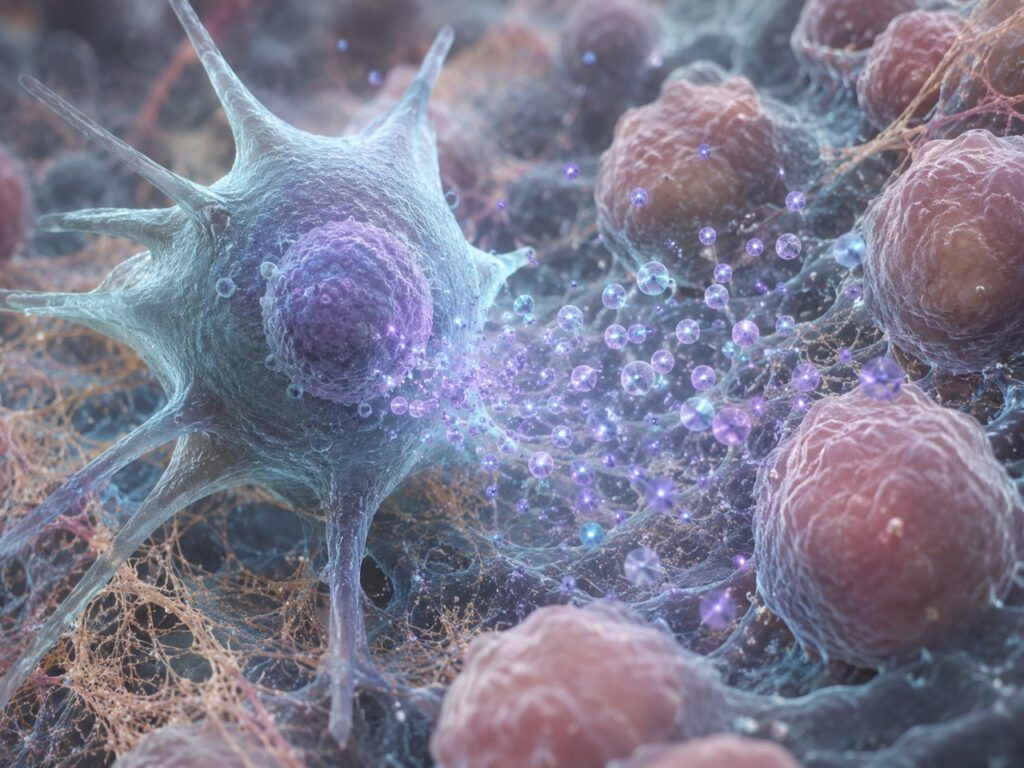
Mesenchymal stem cells, often called MSCs, are living cells capable of sensing and responding to their environment. For many years, people believed stem cells worked primarily by replacing damaged tissue. While this may occur in limited circumstances, researchers now recognize that much of the benefit of MSCs appears to come from their ability to communicate with other cells.
I often describe MSCs as biological factories. They receive information from their environment and respond by producing growth factors, cytokines, immune-modulating compounds, and other signaling molecules. They can react to inflammation, tissue injury, and biological stress. This dynamic and adaptive behavior is one of the reasons MSCs continue to generate so much excitement within regenerative medicine.
What Are Exosomes?
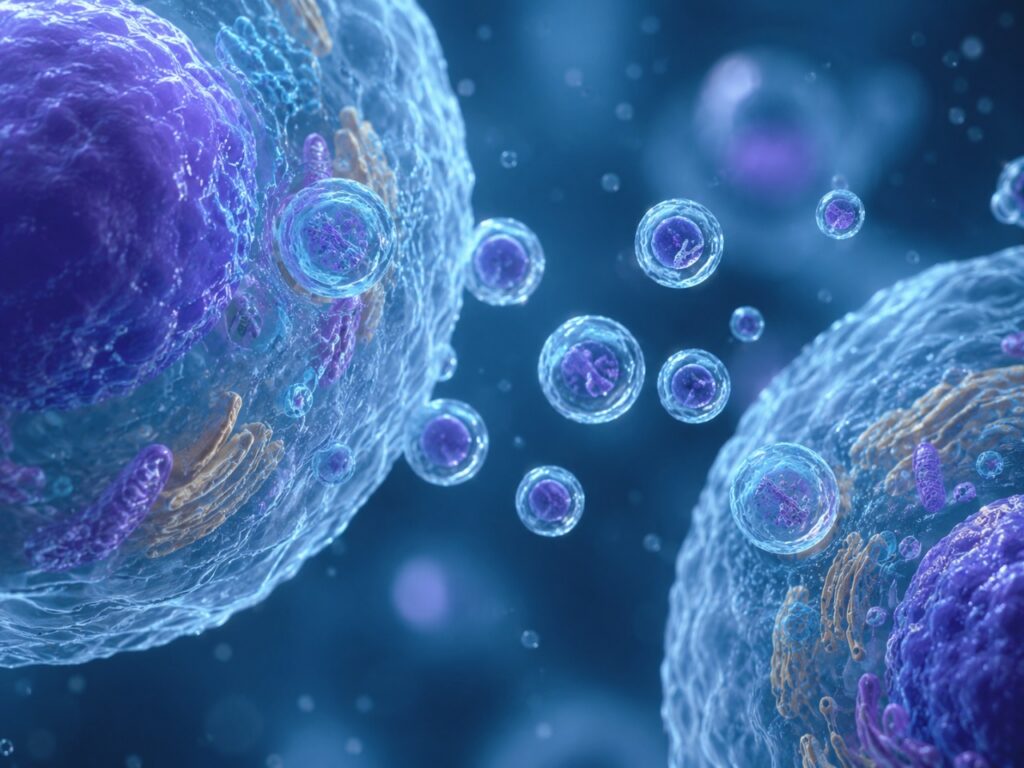
Exosomes are tiny extracellular vesicles released by cells. If stem cells are biological factories, exosomes are some of the messages those factories send.
These microscopic packets contain proteins, lipids, messenger RNA, microRNA, growth factors, and other signaling molecules that help cells communicate with one another. Exosomes are not living cells. They do not continue producing new signals after administration. Instead, they deliver a concentrated package of biological instructions that can influence cellular behavior and support communication throughout the body.
In many ways, exosomes represent a focused signaling strategy. Rather than introducing living cells, they provide a powerful burst of biological information designed to influence repair, recovery, and adaptation.
Exosomes vs. Stem Cells: What’s the Difference?
Although both therapies are designed to support the body’s natural repair processes, they work in different ways. Understanding these differences can help explain why one approach may be more appropriate than another, depending on a patient’s individual needs and treatment goals.
| Feature | Exosomes | Mesenchymal Stem Cells |
|---|---|---|
| Living cells | No | Yes |
| Continue responding after treatment | No | Yes |
| Primary role | Deliver biological signals | Produce and release biological signals |
| Adaptive behavior | No | Yes |
| Focus | Cellular communication | Cellular communication plus ongoing biological activity |
What Current Research Suggests
Research into regenerative medicine continues to evolve rapidly. Scientists are actively studying how exosomes and mesenchymal stem cells influence inflammation, immune regulation, tissue repair, and cellular communication.
A 2025 review on mesenchymal stem cell-derived extracellular vesicles explains that these naturally released vesicles carry bioactive molecules, including proteins and genetic material, that participate in immune regulation, tissue repair, and regenerative signaling. The review also highlights ongoing research exploring their potential applications in neurological conditions such as Alzheimer’s disease, Parkinson’s disease, and other neurodegenerative disorders.
While laboratory and early clinical studies have shown encouraging findings, researchers emphasize that additional well-designed clinical trials are needed to better understand which patients may benefit most, determine optimal treatment strategies, and evaluate long-term outcomes before these therapies become more widely adopted in clinical practice.
How I Think About the Decision
When a patient comes to see me, I do not immediately start by choosing exosomes or stem cells. I begin by understanding the person. What are their goals? What challenges are they facing? What does their medical history reveal? What do their biomarkers tell us?
Regenerative medicine should never be reduced to a product selection exercise. It is a strategic process. The therapy is important, but the context in which that therapy is delivered may be equally important. The decision must be individualized.
When Exosomes May Be the Right Choice
There are many situations in which exosomes may be an excellent option. Patients who are early in their regenerative medicine journey often appreciate a focused intervention that supports cellular communication and regenerative signaling pathways. Exosomes can fit naturally into a broader plan that includes nutrition, exercise, sleep optimization, metabolic health, hormone balancing, and other foundational interventions.
For some patients, exosomes are the right level of intervention at the right time. They provide an opportunity to support the body’s natural repair processes while continuing to optimize the biological environment for healing.
Exosomes are extracellular vesicles that carry signaling molecules, including proteins, lipids, and genetic material. These biological messengers play an important role in how cells communicate with one another.
Rather than viewing exosomes as an isolated treatment, I see them as one component of a personalized strategy that considers the patient’s overall health, neurological condition, and long-term goals. When combined with comprehensive care that addresses the biological factors influencing recovery, exosomes can complement a thoughtful regenerative medicine program.
When Mesenchymal Stem Cells May Be the Right Choice
There are also situations in which I begin to think more seriously about autologous mesenchymal stem cell therapy. These patients are often seeking the most comprehensive regenerative strategy available. They may have already invested significant effort into improving their health and addressing major barriers to healing.
Because MSCs are living cells, they continue interacting with their environment after administration. Many experts believe this ongoing adaptive activity may contribute to their regenerative potential. For some individuals, MSC therapy may represent a logical next step in a larger regenerative program.
One of the distinguishing characteristics of autologous mesenchymal stem cells is their ability to adapt to the biological environment in which they are placed. Rather than delivering a fixed set of signals, these living cells may continue responding to local conditions by releasing bioactive molecules involved in cellular communication and tissue repair.
That adaptive behavior is one reason individualized treatment planning is so important. Before recommending MSC therapy, I carefully evaluate each patient’s neurological condition, overall health, treatment goals, and readiness for regenerative medicine to determine whether this approach aligns with their specific needs.
The Factor Most Clinics Overlook

One of the biggest misconceptions in regenerative medicine is that outcomes depend entirely on the product being administered. In reality, the body’s readiness to respond may be just as important.
I often use the analogy of planting seeds. Even the highest-quality seeds struggle in poor soil. The same principle applies to regenerative medicine. Sleep quality, insulin sensitivity, inflammation, nutritional status, hormonal balance, exercise habits, mitochondrial health, and stress resilience all influence the body’s ability to respond.
This is one reason the Brain Tune Up! and Sharlin Neuro-Regenerative programs place such a strong emphasis on understanding the biological environment before and after regenerative therapies are administered.
The Three Questions That Guide My Recommendations
When helping patients navigate this decision, I consistently return to three questions.
First, what biological problem are we trying to solve? Second, how prepared is the body to respond? Third, what level of regenerative intervention makes sense right now?
The answer today may not be the answer six months from now. Some patients begin with exosomes and later pursue MSC therapy. Others achieve their goals without ever needing stem cells. The journey is rarely linear, which is why thoughtful assessment is so important.
The Future of Precision Neurology and Regenerative Medicine
The future of regenerative medicine is not about finding one treatment that works for everyone. The future is personalization. It is about understanding the unique biological drivers affecting each individual and developing a strategy that aligns with those findings.
At Sharlin Health & Neurology, regenerative medicine is never viewed as a standalone procedure. It is integrated into a larger framework that includes functional medicine, lifestyle optimization, biomarker analysis, neurological evaluation, and ongoing support. The goal is not simply to administer a therapy. The goal is to help patients achieve meaningful improvements in function, quality of life, and long-term health.
Why Your Biological Readiness Matters
If there is one message I hope you take away from this article, it is this: stop asking which treatment is better and start asking which strategy is most appropriate.
Exosomes are not merely a substitute for stem cells. Stem cells are not automatically superior to exosomes. They are different tools designed to accomplish different objectives.
These factors are rarely considered in isolation. They interact with one another in ways that may influence how effectively regenerative therapies support the body’s natural repair processes. Improving the biological environment before treatment is often just as important as selecting the regenerative therapy itself.
The right choice depends on your biology, your goals, your diagnosis, your readiness, and where you are in your health journey. That is the essence of precision medicine, and it is the philosophy that guides every recommendation we make at Sharlin Health & Neurology.
Frequently Asked Questions
1. Are exosomes better than mesenchymal stem cells?
Not necessarily. Exosomes and mesenchymal stem cells serve different roles in regenerative medicine. Exosomes deliver biological signals that support cellular communication, while mesenchymal stem cells are living cells that can continue responding to their environment after treatment. The most appropriate option depends on your diagnosis, overall health, treatment goals, and the biological factors influencing your condition.
2. What is the main difference between exosomes and mesenchymal stem cells?
The primary difference is that mesenchymal stem cells are living cells, whereas exosomes are extracellular vesicles released by cells. Exosomes carry proteins, lipids, messenger RNA, microRNA, and other signaling molecules that help cells communicate. Mesenchymal stem cells can continue producing these signals after administration, while exosomes deliver a concentrated package of biological information.
3. Are exosomes and stem cells used for the same neurological conditions?
Research is exploring both therapies across a range of neurological conditions, including Alzheimer’s disease, Parkinson’s disease, multiple sclerosis, traumatic brain injury, and other disorders that affect the nervous system. However, the most appropriate regenerative strategy varies from person to person and should be determined through a comprehensive medical evaluation.
4. How do you determine whether exosomes or mesenchymal stem cells are appropriate?
The decision begins with understanding the individual patient rather than selecting a specific therapy. I consider factors such as your neurological condition, medical history, biomarkers, overall health, treatment goals, and biological readiness before recommending a regenerative medicine strategy.
5. Why is biological readiness important before regenerative medicine?
Regenerative therapies work within the body’s existing biological environment. Factors such as inflammation, metabolic health, sleep quality, nutrition, hormonal balance, exercise habits, and overall neurological health may influence how the body responds. Optimizing these factors is often an important part of a comprehensive regenerative medicine program.
6. Is regenerative medicine a standalone treatment?
In my practice, regenerative medicine is not viewed as a standalone procedure. It is integrated into a personalized treatment plan that may also include neurological evaluation, functional medicine, lifestyle optimization, biomarker analysis, and ongoing clinical support. This comprehensive approach helps ensure that treatment decisions are tailored to each patient’s unique needs.
Work with me
If you are considering regenerative medicine for Alzheimer’s disease, Parkinson’s disease, multiple sclerosis, ALS, cognitive decline, chronic fatigue, or another neurological condition, schedule a consultation with Sharlin Health & Neurology.
Together, we can evaluate your unique biology, identify barriers to recovery, and determine whether exosomes, mesenchymal stem cells, or another regenerative strategy may be most appropriate for you.
